From Flyers to Conversions: How Singapore SMEs Use O2O Marketing to Turn Exposure into Real Sales
Distributing flyers, scheduling the social media posts, and collaborating with influencers – that’s what is usually done by Singapore SMEs for their marketing campaign. Each may perform individually, but the challenge is how to connect them into one journey that leads to customers from awareness to action.
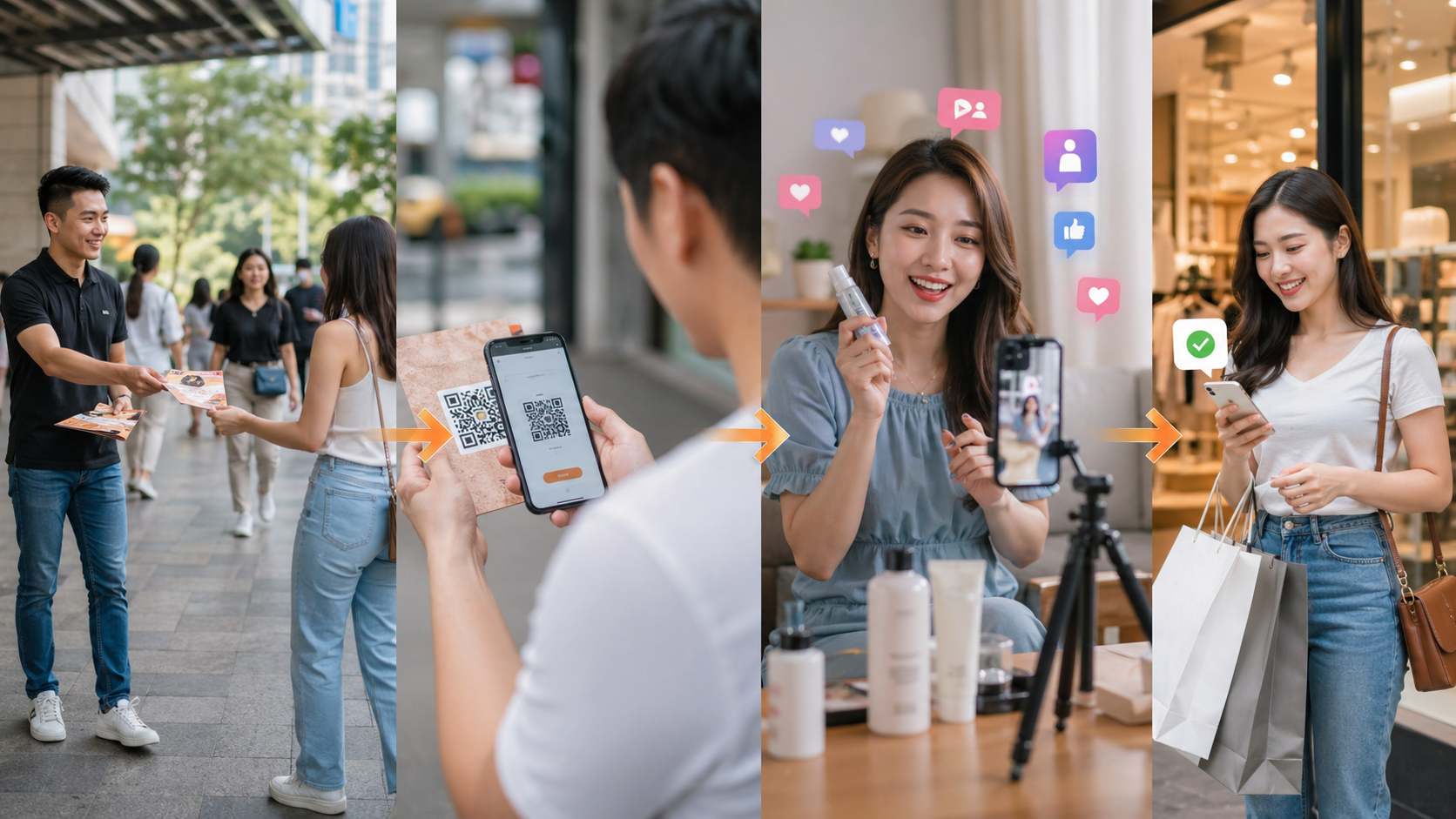
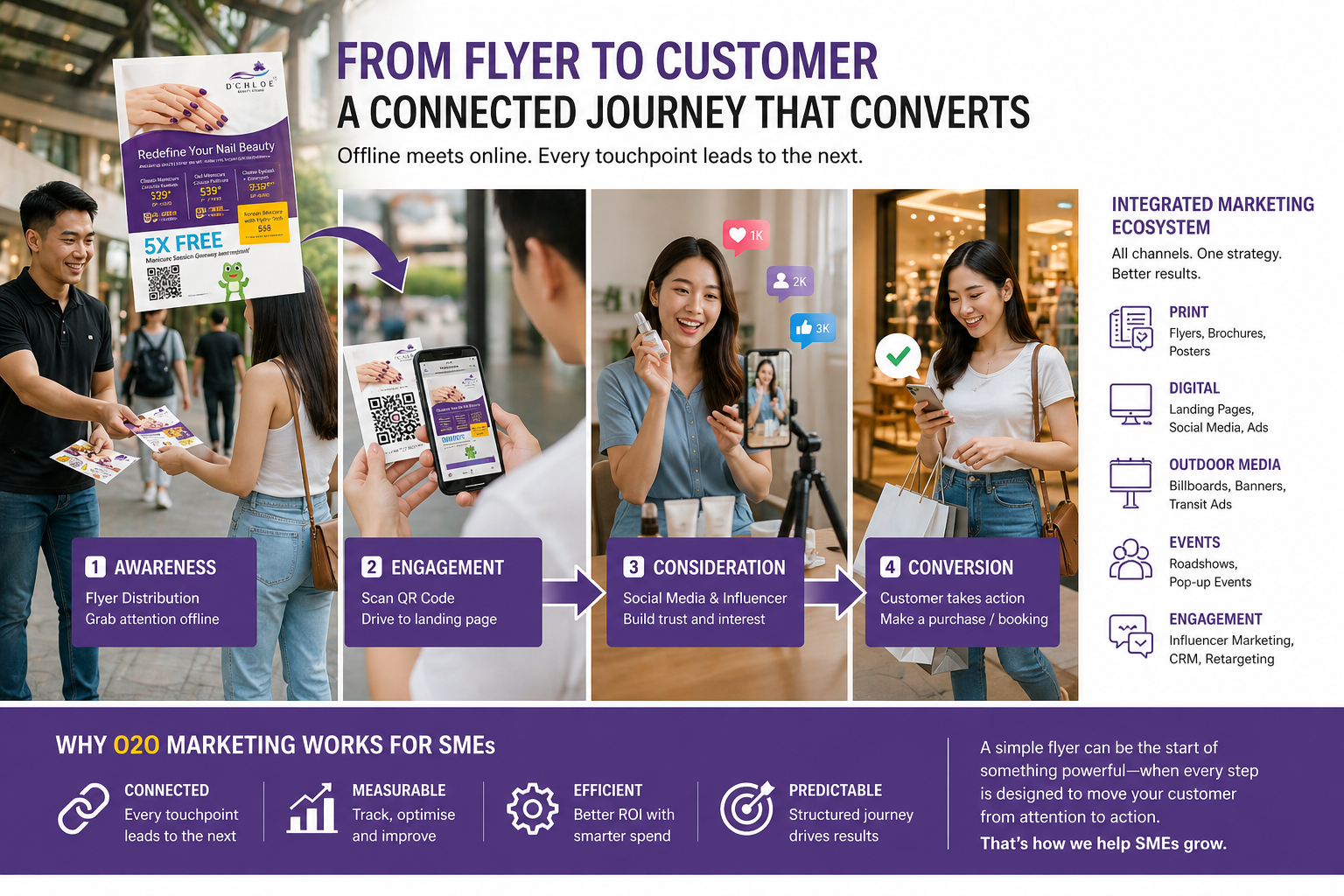
At iKen Marketing, we approach this differently. As an end-to-end marketing ecosystem, we combine offline, online, and engagement strategies into one structured flow. This is what we define as O2O marketing, where offline touchpoints lead seamlessly into online conversion.
A clear example is the campaign executed for D’Chloe Beauty Paradise. Instead of relying on flyer distribution alone or digital marketing alone, the campaign was designed as a connected system. Every touchpoint had a role, and every step led to the next.

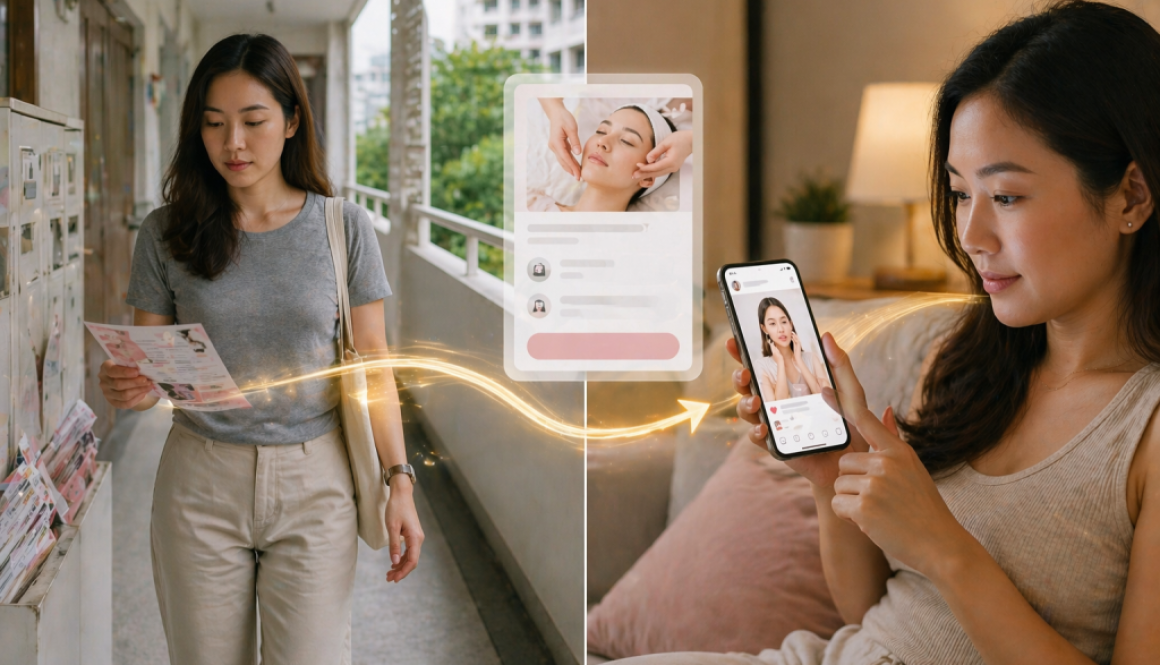
The challenge we often see in Singapore SMEs is not a lack of effort, but a lack of connection. Customers receive flyers but forget. They see social media posts but do not act. Opportunities are lost in the gap between channels.
This is where O2O marketing becomes critical. It is not about doing more. It is about structuring the journey properly.
Offline First – Flyers with QR Code as the Entry Point
In the D’Chloe campaign, the offline layer was intentionally designed as the starting point. Flyers were distributed directly to targeted HDB households around the Far East Plaza area, ensuring relevance and proximity to the business location.

From experience, one of the biggest problems with flyer marketing is not reach, but retention. People receive flyers, glance at them briefly, and move on. Without a next step, the message ends there.
To resolve this, the flyer was redesigned as a trigger, not just an information piece. A clear QR code was placed prominently, supported by a simple and direct call to action. The objective was not to explain everything on paper, but to guide the customer to take immediate action.
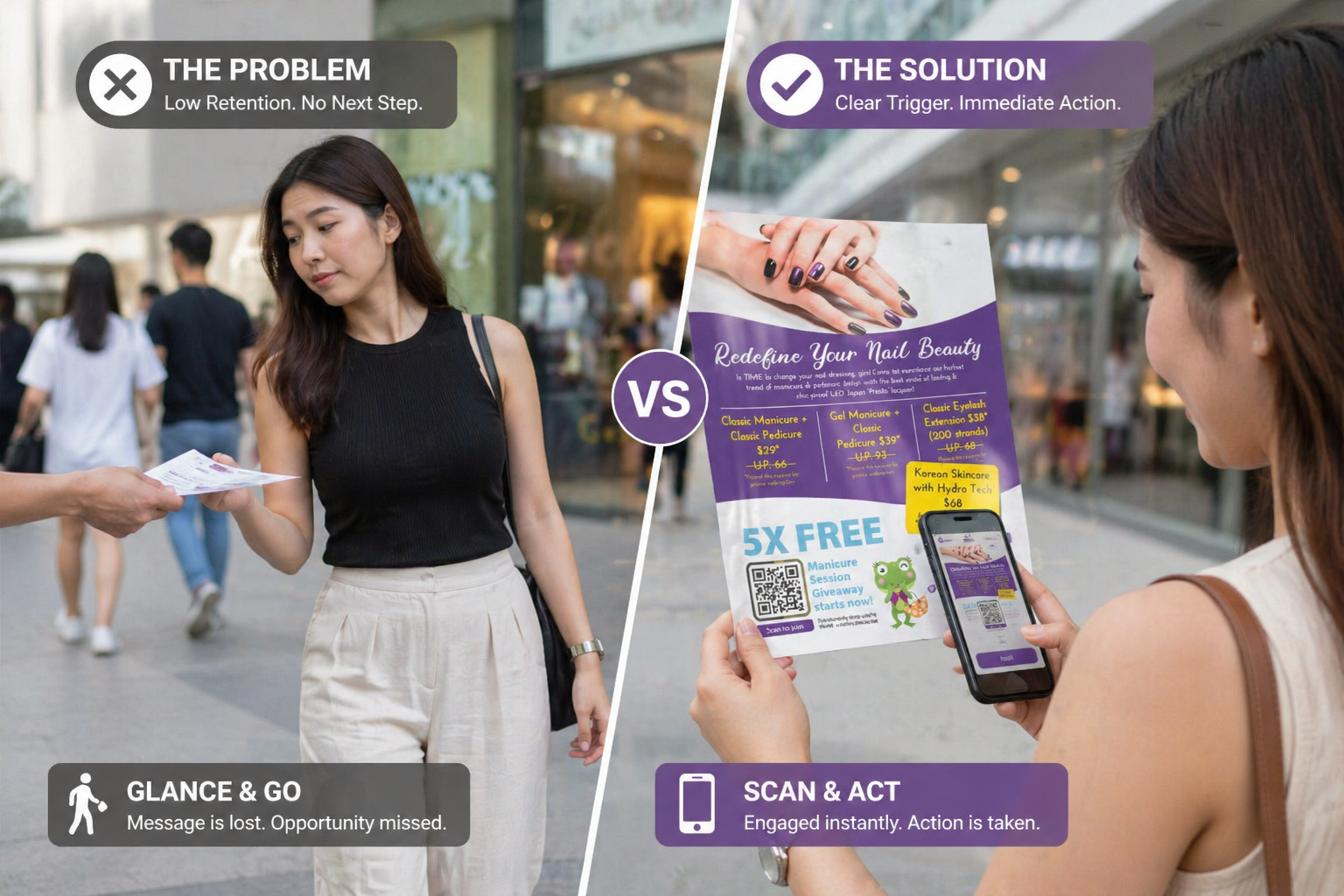
We used this approach because Singapore consumers are mobile-first and highly responsive to convenience. Scanning a QR code resulted in an instant action. Another important thing is that flyers are no longer just for awareness. They act as bridges that connect physical exposure to measurable engagement.
The audience response in this campaign reflected this shift. Instead of passively receiving information, customers interacted with the flyer. The act of scanning created a moment of engagement, which is something traditional flyer campaigns often fail to achieve.
Online Conversion – Landing Page, Influencer, and Social Sharing
Once customers scanned the QR code, they were directed to a dedicated landing page. This is where the second layer of the O2O system takes over.
The landing page served as a controlled environment where messaging, design, and user flow were aligned. Instead of sending traffic to a general website or social media page, the experience was focused and conversion-driven.
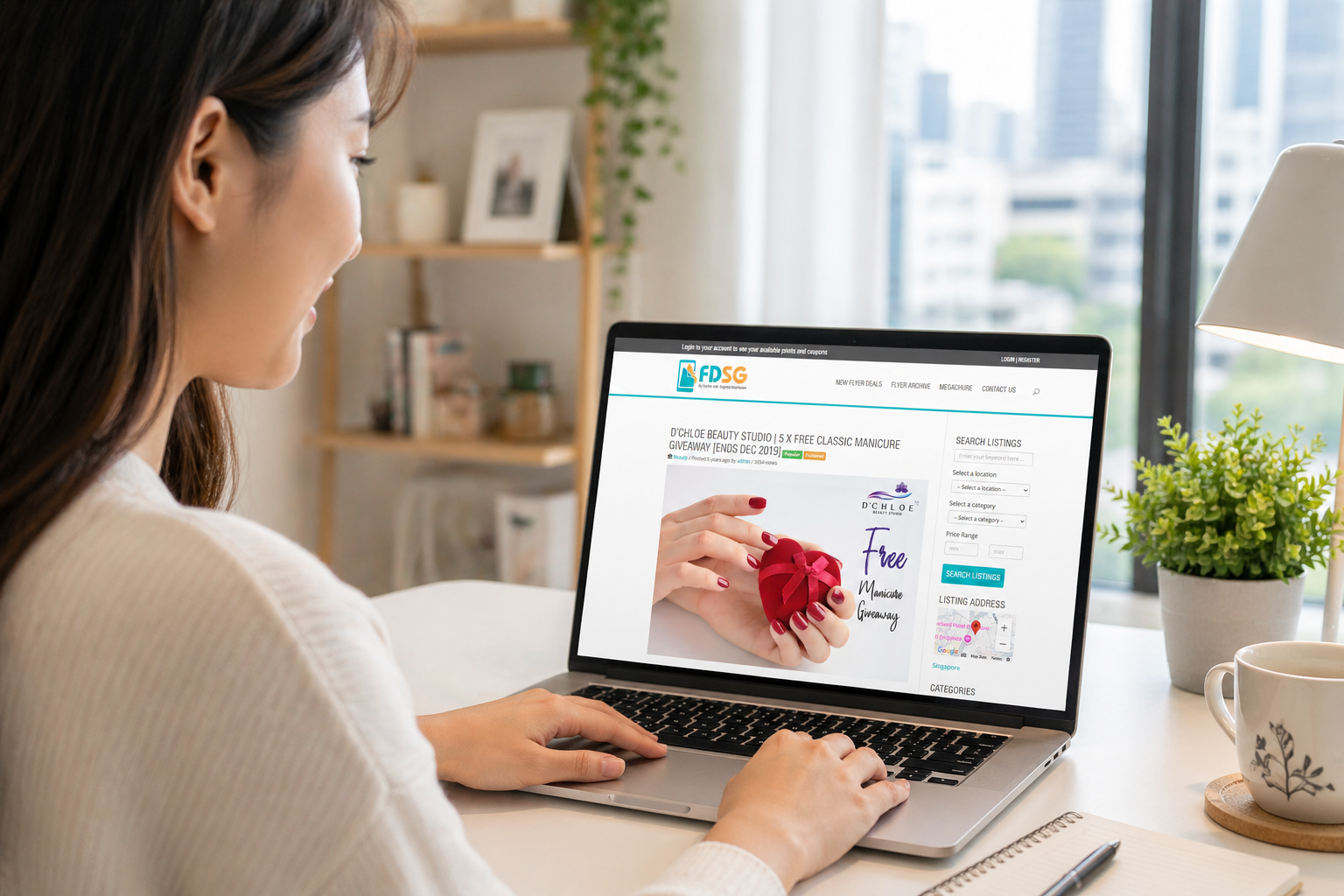
The landing page featured Alicia Cho, a Singapore-based lifestyle influencer, sharing her experience with D’Chloe Beauty Paradise. This was not positioned as a loud promotion, but as a relatable endorsement. When customers arrived on the page, they saw a familiar face rather than just a brand message.
From our observation, this significantly reduced hesitation. Customers are more willing to proceed when they feel reassured by someone they recognize or relate to.

The campaign also included a simple contest to drive engagement. Customers were invited to participate by commenting, sharing, and inviting friends on their Facebook page. This introduced an element of fun and involvement, transforming the campaign from passive viewing into active participation.

What makes this effective is not the individual components, but how they work together.
- The flyer creates curiosity
- The QR code drives action
- The landing page delivers clarity
- The influencer builds trust
- The contest encourages participation
- The sharing expands reach.
This is what defines an offline-to-online marketing ecosystem.
Closing
The D’Chloe campaign demonstrates a simple but powerful truth. A marketing campaign could fail when there is no clear path from attention to action.
For Singapore SMEs, the opportunity lies in connecting offline and online efforts into one structured journey. Flyers should not end at awareness. Digital campaigns should not start without context. Every touchpoint should lead to the next.
It’s all about designing how they work together. At iKen Marketing, we operate as an end-to-end marketing ecosystem that integrates print, digital, outdoor media, events, and engagement strategies into one system. This allows businesses to move beyond fragmented execution and focus on measurable outcomes.
When done correctly, a simple flyer can become the start of a conversion journey. And when that journey is structured well, marketing becomes more predictable, more efficient, and more effective.
For SMEs in Singapore looking to improve results without increasing complexity, O2O marketing offers a clear and practical path forward.