Retargeting That Works: How Singapore SMEs Can Turn Interested Audiences Into Leads
Key Summary
Digital retargeting helps Singapore SMEs reconnect with eligible audiences who have visited their website, engaged with advertising, or interacted with relevant content without enquiring. By segmenting audiences, creating relevant follow-up advertisements, and improving landing pages, businesses can encourage potential customers to reconsider an offer and take the next step. However, effective retargeting requires more than repeatedly showing the same advertisement. SMEs need to understand customer behaviour, respect privacy requirements, and measure meaningful outcomes such as qualified leads, conversion rates, and cost per lead. This guide explains how businesses can build a practical retargeting strategy and use campaign insights to improve digital marketing performance.
Introduction
Many Singapore SMEs invest in digital advertising. They expect people to click their ads, visit their website, and explore their services. But few of them actually call to enquire. This can be frustrating. The campaign appears to attract attention, yet that attention does not translate into sales opportunities.

The possible reasons are that customers may be comparing providers, researching prices, waiting for the right time, or looking for more information before making a decision. Others may find the landing page confusing, struggle to understand the offer, or simply get distracted. A website visit signals interest, but it does not automatically mean someone is ready to buy.
What every business needs is digital retargeting. Retargeting allows businesses to reach eligible audiences who have previously interacted with their website, advertisements, or other digital content. Instead of treating every potential customer as a new prospect, SMEs can develop follow-up messages that address their questions and encourage another visit. The goal is to make the next step more relevant and easier to take.
How Singapore SMEs Can Build a More Effective Retargeting Strategy
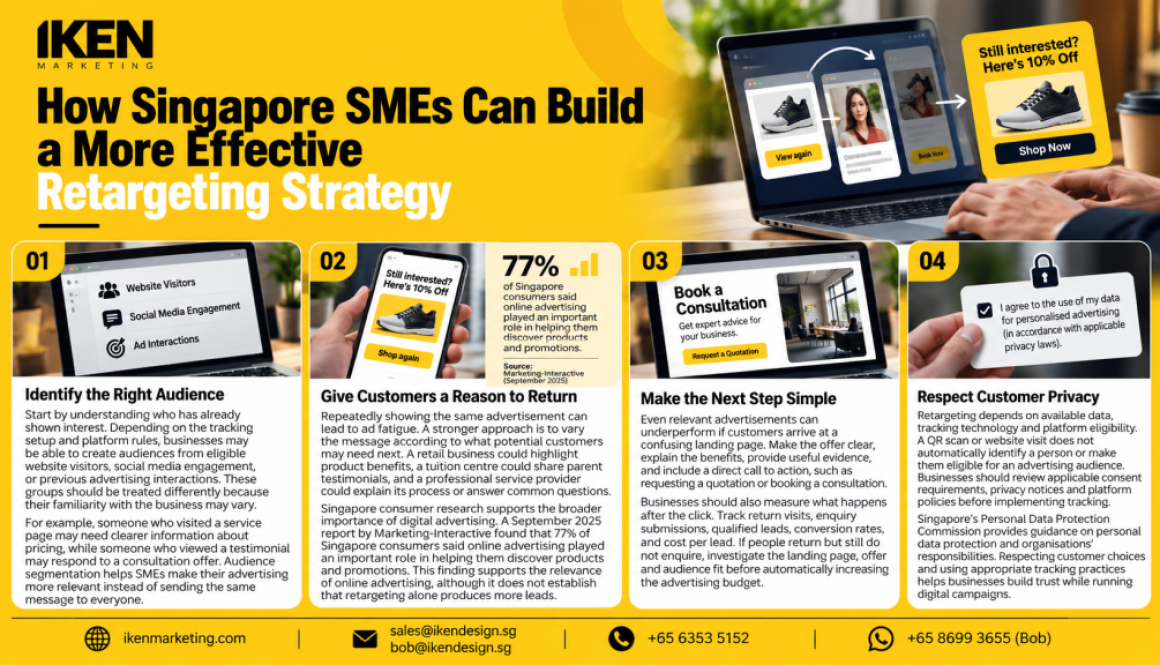
Identify the Right Audience
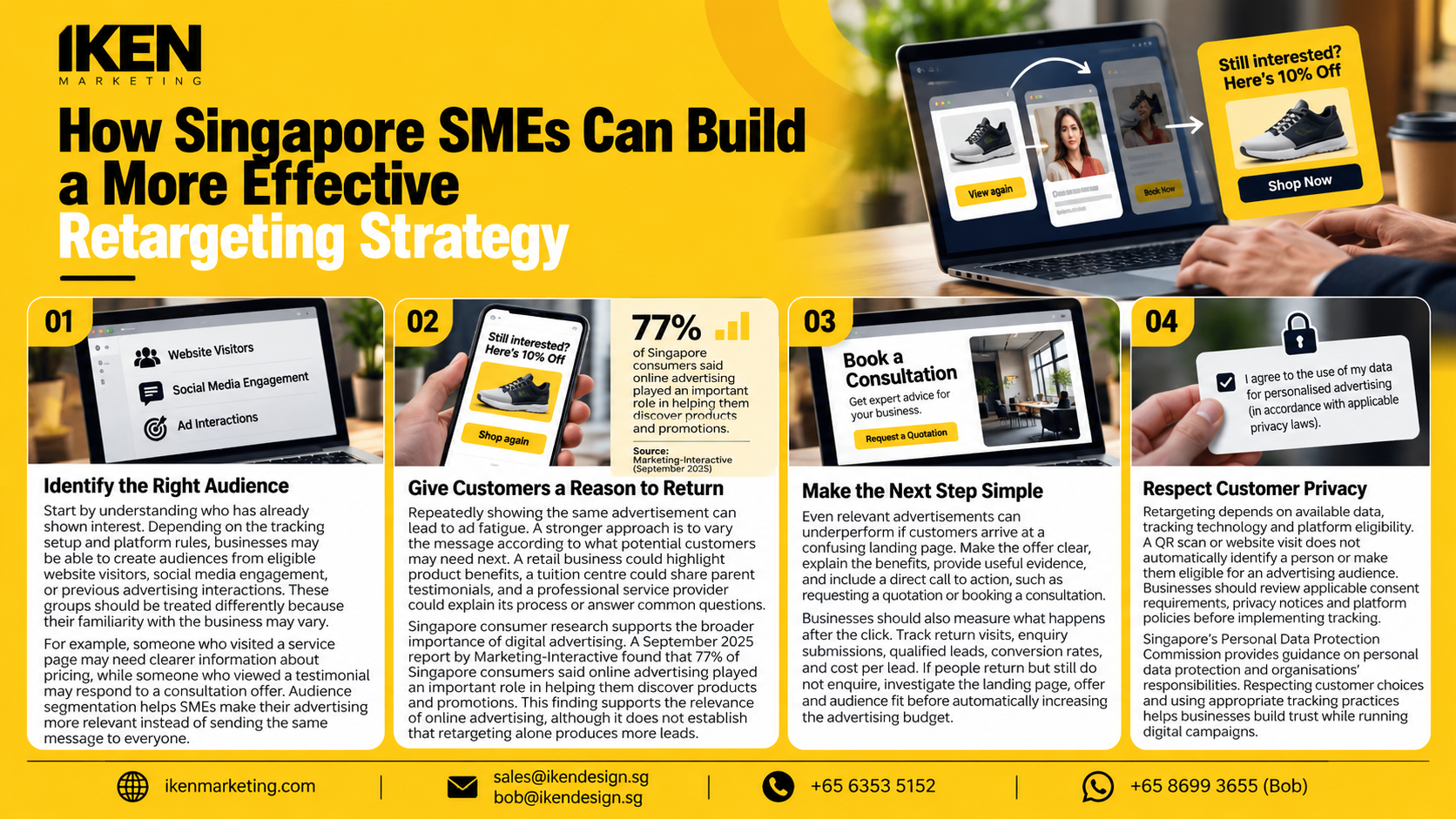
Start by understanding who has already shown interest. Depending on the tracking setup and platform rules, businesses may be able to create audiences from eligible website visitors, social media engagement, or previous advertising interactions. These groups should be treated differently because their familiarity with the business may vary.

For example, someone who visited a service page may need clearer information about pricing, while someone who viewed a testimonial may respond to a consultation offer. Audience segmentation helps SMEs make their advertising more relevant instead of sending the same message to everyone.
Give Customers a Reason to Return
Repeatedly showing the same advertisement can lead to ad fatigue. A stronger approach is to vary the message according to what potential customers may need next. A retail business could highlight product benefits, a tuition centre could share parent testimonials, and a professional service provider could explain its process or answer common questions.
Singapore consumer research supports the broader importance of digital advertising. A September 2025 report by Marketing-Interactive, covering research involving Singapore consumers, found that 77% said online advertising played an important role in helping them discover products and promotions. This finding supports the relevance of online advertising, although it does not establish that retargeting alone produces more leads.
Make the Next Step Simple
Even relevant advertisements can underperform if customers arrive at a confusing landing page. Make the offer clear, explain the benefits, provide useful evidence, and include a direct call to action, such as requesting a quotation or booking a consultation.
Businesses should also measure what happens after the click. Track return visits, enquiry submissions, qualified leads, conversion rates, and cost per lead. If people return but still do not enquire, investigate the landing page, offer and audience fit before automatically increasing the advertising budget.
Respect Customer Privacy
Retargeting depends on available data, tracking technology, and platform eligibility. A QR scan or website visit does not automatically identify a person or make them eligible for an advertising audience. Businesses should review applicable consent requirements, privacy notices and platform policies before implementing tracking.

Singapore’s Personal Data Protection Commission provides guidance on personal data protection and organisations’ responsibilities. Respecting customer choices and using appropriate tracking practices helps businesses build trust while running digital campaigns.
How iKen Marketing Can Help Singapore SMEs Improve Retargeting
Effective retargeting requires more than choosing an advertising platform. Businesses need to understand their audience, create relevant advertising messages, provide a clear path to enquiry, and measure campaign performance. Without a coordinated strategy, SMEs may spend money attracting attention without understanding why potential customers are not converting.
iKen Marketing’s strength lies in connecting different marketing activities within one wider ecosystem. By bringing together campaign planning, creative development, website and landing-page improvements, digital advertising, and lead-generation activities, iKen can help SMEs create a more coordinated approach to turning audience interest into business opportunities.
Our approach follows four practical steps:
- IDENTIFY: Understand eligible audiences and their previous interactions to determine who may benefit from follow-up advertising.
- CREATE RELEVANT MESSAGES: Develop suitable advertisements that address customer questions, communicate value, and provide a clear reason to return.
- RE-ENGAGE: Use appropriate advertising channels to reconnect with eligible audiences and guide them towards the next step.
- MEASURE: Review enquiries, qualified leads, conversion rates, and cost per lead to identify what is working and where improvements are needed.
For Singapore SMEs, this structured approach makes marketing decisions more practical and transparent. Businesses can better understand who they are reaching, what each advertisement is intended to achieve, and which areas require improvement. By connecting advertising with the website experience and lead-generation process, iKen helps SMEs make more informed use of their marketing budgets and work towards measurable business outcomes, without relying on promises of guaranteed leads or sales.
Turn Retargeting Into a Smarter Lead Generation Strategy
Digital retargeting can help businesses reconnect with interested audiences, but results depend on audience quality, message relevance, the offer, the landing page, and the follow-up process. A campaign that attracts clicks without generating enquiries needs investigation, not simply more spending. Start by identifying where potential customers lose interest and test practical improvements.
For Singapore SMEs, the most useful metrics extend beyond impressions and clicks. Monitor qualified enquiries, conversion rates, cost per lead, and eventual sales wherever reliable tracking is available. These measures help you understand whether retargeting contributes to meaningful business outcomes and whether your marketing budget is being used effectively.
What is the biggest challenge in your current digital marketing campaign: attracting the right audience, getting website visitors to enquire, or following up with potential customers? Comment “RETARGETING” and tell us your industry and biggest challenge. We would love to hear what you are experiencing and share practical ideas for improving your campaign.
Q&A:
What is digital retargeting?
Digital retargeting is an advertising approach that reconnects with eligible audiences who have previously interacted with a website, advertisement, or digital content. It aims to encourage another visit or a specific action, such as submitting an enquiry.
Is retargeting suitable for small businesses in Singapore?
Yes. SMEs can start with a focused audience, a clear offer, and a manageable advertising budget. Suitability depends on whether the business has enough eligible audience data, an effective landing page, and a way to measure results.
What is the difference between retargeting and lead follow-up?
Retargeting uses advertising to reconnect with eligible audiences who have shown interest. Lead follow-up involves contacting people who have already submitted an enquiry, such as through WhatsApp, email, or a sales call. Both can support conversion, but they serve different stages of the customer journey.
How can SMEs measure retargeting success?
Track return visits, enquiry submissions, qualified leads, conversion rates, and cost per lead. Where possible, connect these metrics to actual sales. Clicks and impressions can provide context, but they do not independently demonstrate commercial success.
Can every website visitor be retargeted?
No. Retargeting depends on the tracking setup, audience eligibility, platform rules, available data, and applicable privacy requirements. Businesses should not assume that a QR scan or website visit automatically identifies an individual or permits their inclusion in an advertising audience.
How can iKen Marketing help with retargeting?
iKen can help SMEs plan digital campaigns, develop relevant advertising messages, improve landing pages, and evaluate campaign performance as part of a broader lead-generation strategy. The focus is on helping businesses make informed decisions about their audiences, advertising budget, and next steps.